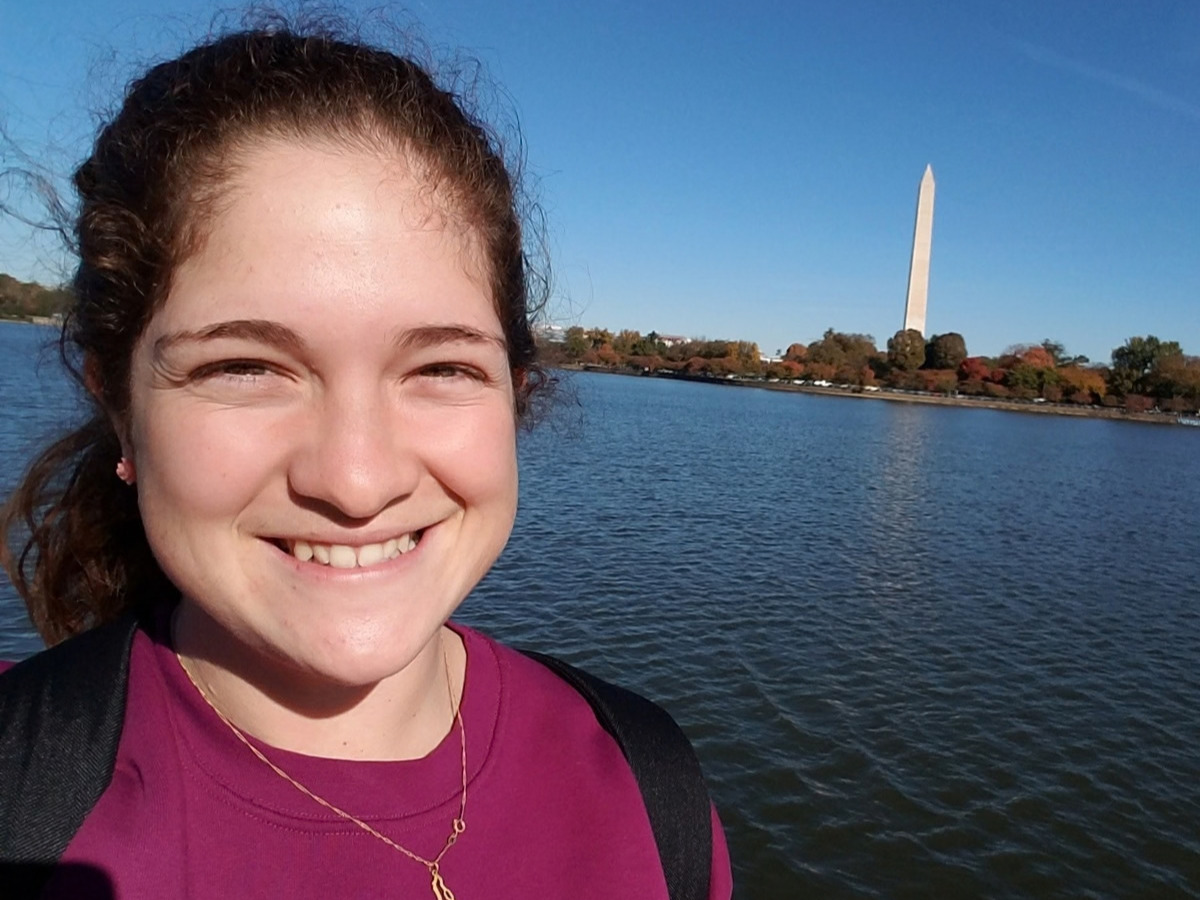
Ella A., Senior Shlicha and Head of the Israeli Delegation to DC
Everything felt so completely new.
When I first landed in Greater Washington ten years ago, that was the only way I could describe it. It was my very first time ever setting foot in the United States, and on a purely physical level, my brain couldn’t process what was happening. I walked out of the airport in August into sweltering heat, looked up, and saw it rain. Coming from Israel, where summer is completely, predictably dry, standing in ninety-degree weather while water poured from the sky felt like stepping onto another planet.
I remember that first Shabbat so clearly. Fresh out of the IDF Education Corps, my uniform barely packed away, I walked into an entirely unfamiliar world of American synagogue life and vibrant liberal Judaism. Everything was culturally complex and utterly fascinating. I came with an educator’s fire, convinced my goal was simple: to evoke emotion around Israel. I was completely okay with anger or frustration, too, as long as there was a heartbeat. What took me by surprise back then was how deeply people wanted to speak Hebrew with me, stumbling over words with a genuine hunger that touched me then, and honestly still touches me today.
Ten years later, I walked off a plane and into this community once again. But the person writing this today feels worlds away from that wide-eyed young woman standing in the August rain.
Ten Years Can Change Everything
A decade carries immense weight. In those ten years, my life changed completely. I got married, became a mom to two incredible kids, and built a home back in Israel. Professionally, I stepped into global Jewish education, as the Educational Director and Manager for the Shlichut program worldwide. Returning now as both a mother and a seasoned professional, I see families, children, and a community I care about deeply through an entirely new lens.
And let’s be honest. The community itself is walking through a very different reality today than in 2016.
Between political polarization, rising antisemitism, and the heavy, lingering trauma of war, we have all been through the wringer. The warm, generous heart of Greater Washington is still here, but the air in the room feels different. Talking about Israel today often feels like handling a hot potato. It’s on everyone’s minds constantly, burning hot, but people are often anxious or hesitant to touch it. In a world dominated by quick soundbites and algorithms, we are constantly surrounded by sharp exclamation points and very few curious question marks.
Yet, wrestling with complexity is in our DNA as Jews. It’s who we are. And when the noise of the world tries to force us into rigid boxes, authentic, human connection becomes our sanctuary.
Living Bridges in a Fragmented World
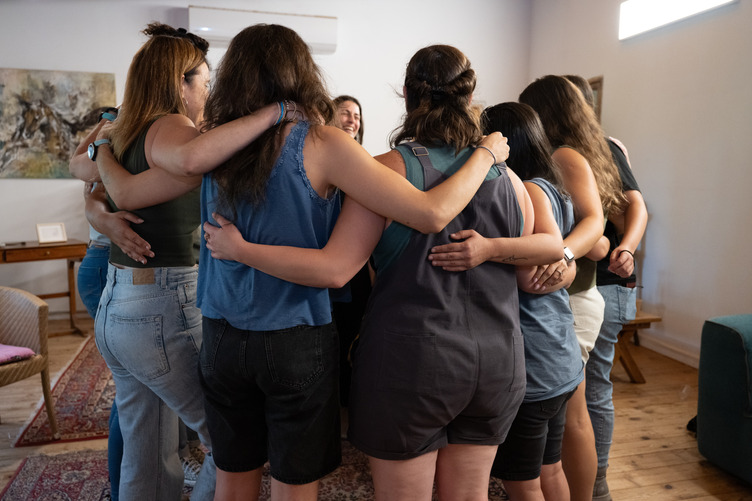
Since October 7, that truth has hit me on a deeply personal level. Shlichut (emissary work) was never meant to be a lecture or a series of polished talking points. It is a living, breathing, two-way street. In the darkest days after the attack, I watched our emissaries across the globe stand as human bridges. They were carrying unbearable heartbreak, some grieving murdered friends, others waiting on agonizing news of hostage family members, one young woman who was supposed to be at the Nova music festival and had only flown out the day before. Yet, they showed up every single day to share their raw, vulnerable truths. In return, this community wrapped them in love, holding space for their broken hearts. That mutual embrace proved to me why we do this: news headlines don’t heal people, but real relationships do.
Stepping into leadership as the head of Greater Washington’s mishlachat (delegation) program, right as it hits its own 10-year milestone, feels like coming full circle in a way that gives me goosebumps. I keep returning to the cantor’s prayer from the High Holidays: Hineni he’ani mima’as (Here I stand, impoverished in deeds). It is that quiet, overwhelming feeling of asking yourself, Who am I to carry this weight? Yet, I step into it with immense devotion, reverence, and gratitude for the trust you’ve placed in me.
My goal for our team of shlichim is to unlock the door for real, honest conversation. My role is to be a problem solver and a catalyst, helping our partner organizations thrive, guiding our shlichim to succeed, and advancing Federation’s mission on the ground. I hope people leave our conversations feeling energized, knowing that whatever challenge or vision they bring to the table, we can tackle it together, not just in words, but through meaningful action.
Anchored in Hope
At my core, as an educator and a mother, I am stubborn about hope.
Hope isn’t a passive wish. Instead, it’s the active belief that a better tomorrow is worth fighting for. I see it in my children every morning, I see it in the Mishlachat delegation serving this community, and I see it in the way people here continue to show up for one another.
Ultimately, my hope is anchored in the conviction that October 7 does not define us. It is an immense tragedy, one that we must study, learn from, and forever remember, but the Jewish people, the State of Israel, and Zionism hold a history, memory, and purpose that existed long before us and will endure long after us.
We are defined by our enduring strength, our continuity, and the way our communities show up for one another, not by the catastrophes along the way. In that shared resilience, hope isn’t just an idea, it is a lived reality.
As our Mishlachat program marks its 10-year milestone, we are already looking ahead, envisioning what our presence will mean as we approach Israel’s 80th anniversary in two years, its 90th in a decade, and far into the future. We cannot predict every curve in the road, but we can decide how we walk it together.
My door is wide open. Let’s dream big, ask the hard questions, and build this next chapter together.
Your support helps ensure our community can continue building meaningful relationships with Israel through authentic experiences, personal connections, and lifelong learning.
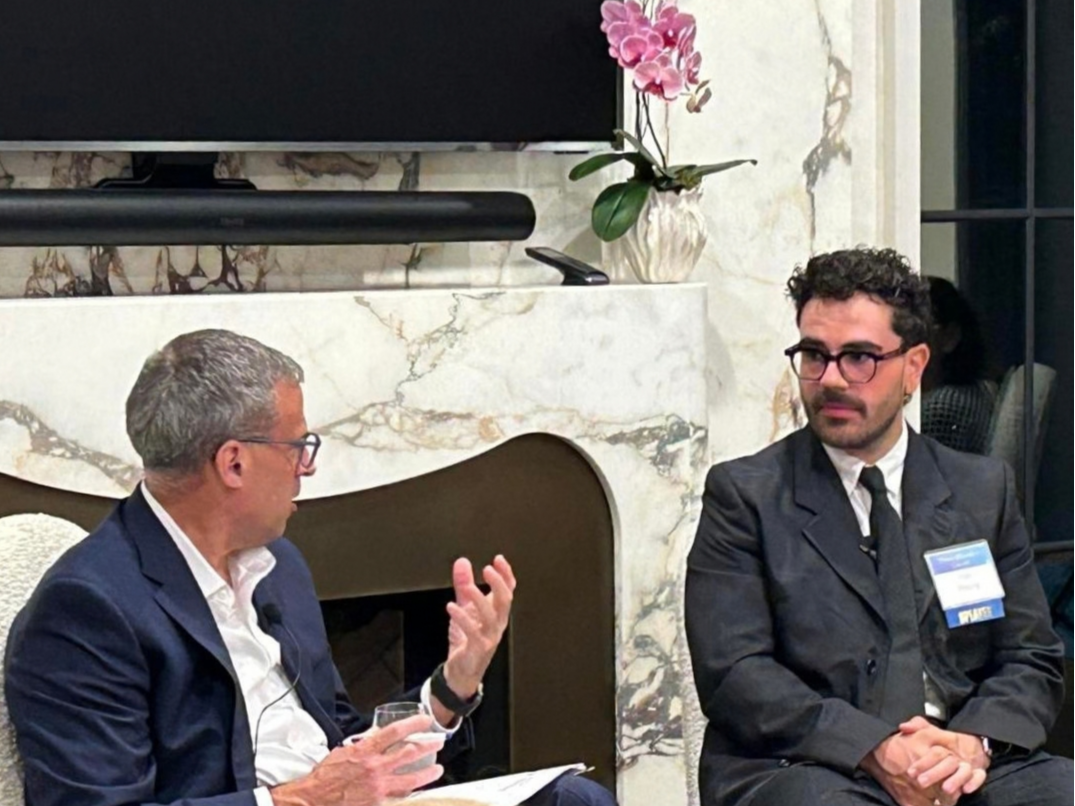
Three years after October 7, Hen Mazzig reflects on grief, Jewish identity, antisemitism, and the importance of making room for one another across different experiences and perspectives.
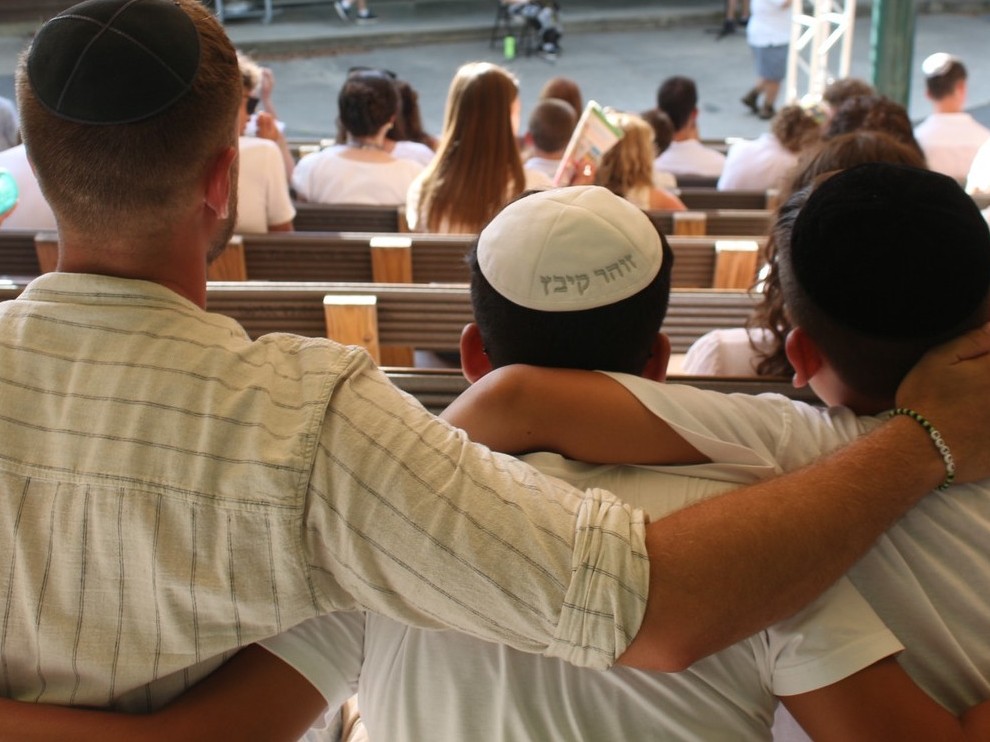
As the October 7 anniversary returns, how can the Jewish community channel grief and passion into a future shaped by both vigilance and love? Drawing on Rav Joseph Soloveitchik’s Kol Dodi Dofek, this reflection explores the tension between self-protection and moral aspiration.
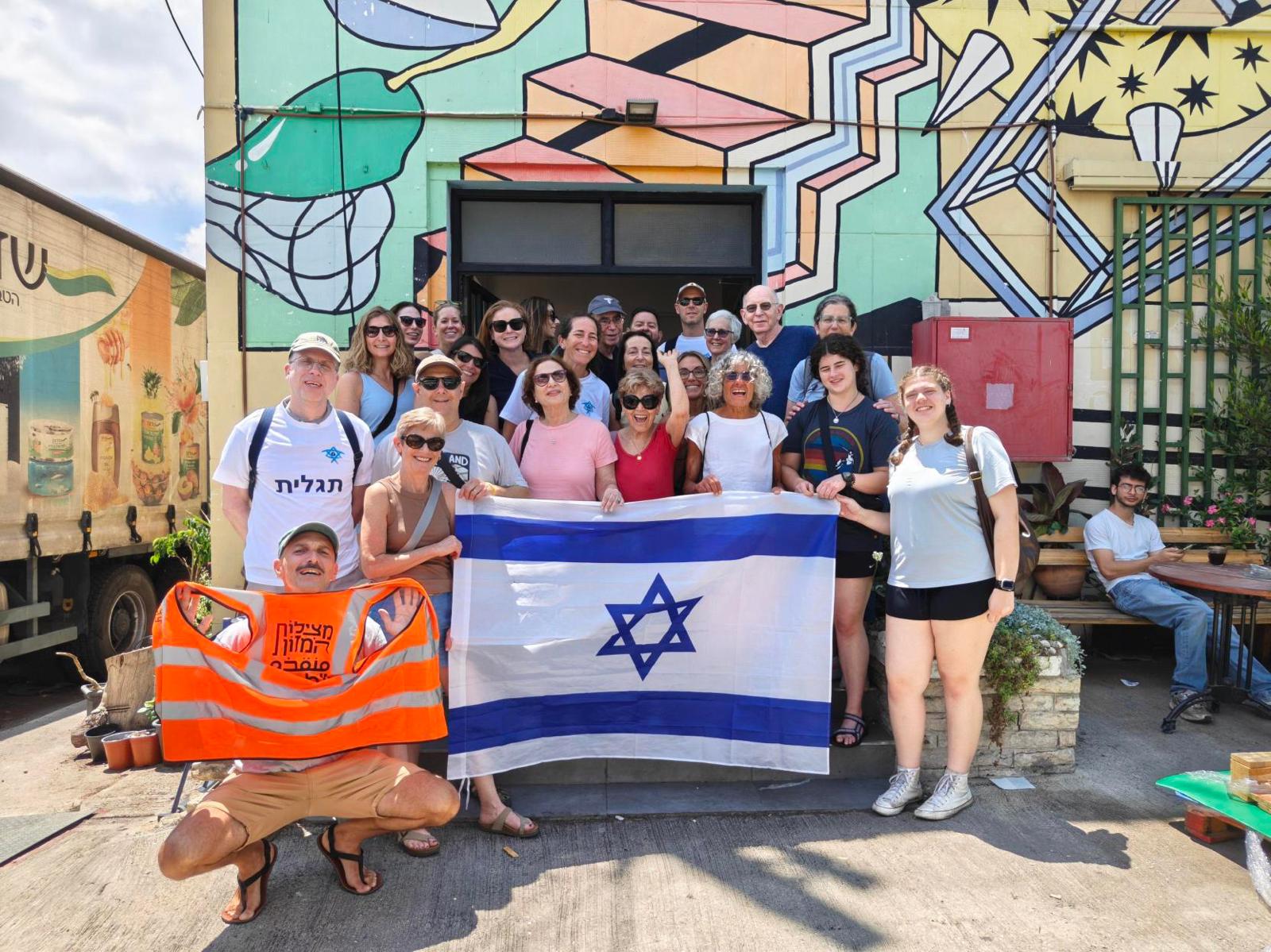
More than 25 members of Greater Washington’s Jewish community traveled to Israel for an eight-day volunteer mission, deepening a growing partnership with Kibbutz Nir Oz through service, solidarity, and personal connections.
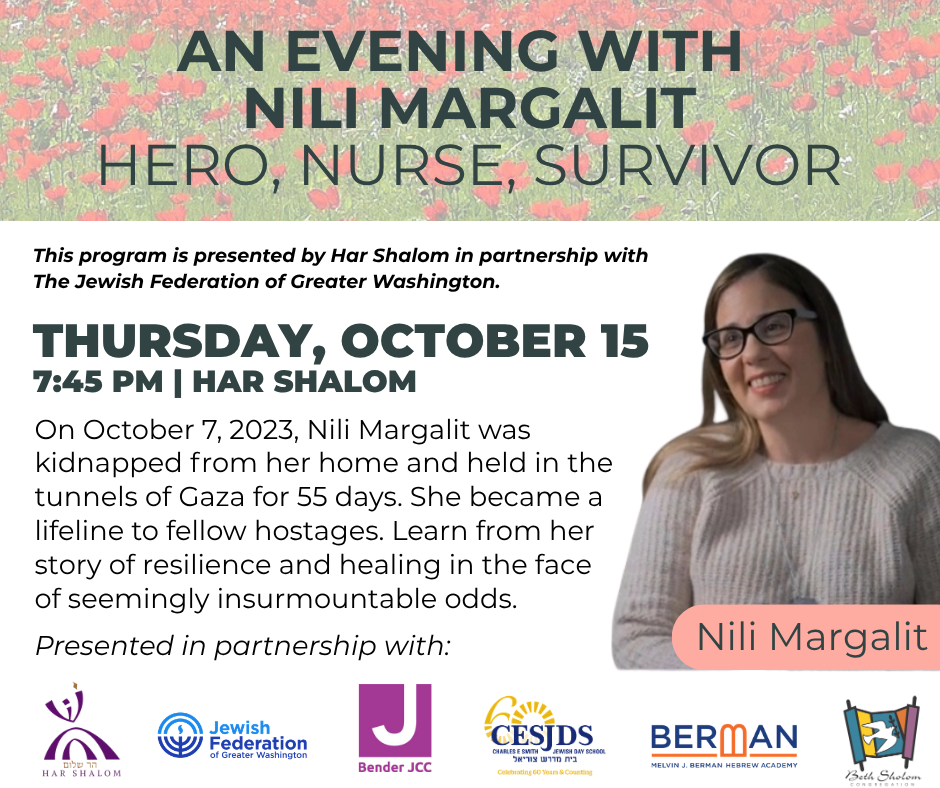
An Evening with Nili Margalit: Hero, Nurse, Survivor
October 6, 2026
Federation Events
NOTE: This program is presented by Har Shalom in partnership with The Jewish Federation of Greater Washington.
DESCRIPTION:
On October 7, 2023, Nili Margalit was kidnapped from her home on Kibbutz Nir Oz and held captive in the tunnels of Gaza for 55 days. A pediatric nurse, Nili became a lifeline to fellow hostages, caring for their physical and emotional needs under unimaginable circumstances.
Join us for an evening with Nili as she shares her story of survival, resilience, and healing—and the bonds she formed with those who endured captivity alongside her.
Nili will be joined by her neighbor from Kibbutz Nir Oz, Eyal Barad, whose daughter Carmel is in urgent need of our support.
Carmel is a young survivor of the October 7 attack on Nir Oz. She continues to live with significant trauma from that day, and she has severe and costly health care needs. Her grandfather was murdered during the attack, and her family continues to navigate the devastating aftermath.
Nili has made it her personal mission to help raise funds for Carmel and her family.
Please join us to hear Nili’s extraordinary story, and, in her honor, help give Carmel the care and support she needs.
Make a donation to support Carmel: https://www.jgive.com/new/en/usd/donation-targets/174927
This program is presented by Har Shalom in partnership with The Jewish Federation of Greater Washington.
Three Years After October 7, There is Still Work to Do
October 6, 2026
The Jewish Federation of Greater Washington
Three years later, what does it mean to keep showing up?
It’s natural to look backward.
To remember where we were when the terrible news began to come in from Israel on October 7, 2023. To think of the lives lost and the lives forever changed by that day. To feel again the uncertainty of those first hours, when no one knew what would happen next.
But three years later, it’s also worth looking forward.
What does it mean to keep showing up after the first shock has passed? What does support look like when an emergency becomes a long-term reality? And what will it take for communities, families and individuals to begin rebuilding, not simply what was lost, but what comes next?
Those questions have shaped The Jewish Federation of Greater Washington’s response ever since.
Because while October 7 was one day, its impact didn’t end that night, the next day, or the next week. The war and fighting that followed created new and evolving needs across Israel. Three years later, families are still displaced. Communities face prolonged uncertainty. Trauma continues as new waves of violence reopen old wounds. Businesses and local economies need help recovering. And new needs emerge as the crisis continues.
Over the past three years, Federation has responded not with a single effort, but with an evolving commitment to the people and communities of Israel. Through 14 rounds of funding, more than 60 grants and $15.4 million provided in crisis relief, Federation has supported 42 organizations across the country, adapting its response as needs changed.
That commitment comes from something deeper than crisis response. It comes from the belief that Jewish communities around the world are connected, and when one part of our community is hurting, we have a responsibility to stand with one another.
This is what Jewish peoplehood means at Federation. It means standing with Israel, being present in moments of profound need, and taking pride in the strength and resilience of the Jewish people. Even though we are thousands of miles apart, we are bound by a shared sense of belonging and care for one another.
Showing up means asking, again and again, what people need now. That question has never been only, How do we respond to this crisis? It has also been, How do we help people continue living?
Helping People Through the Immediate Crisis
In the days after October 7, moving forward meant something very simple. Getting through the day. People needed medical care. Families who had been forced from their homes needed somewhere to turn. Federation directed funding where the needs were most urgent, including $1.2 million for emergency medical care, supporting efforts such as Sheba Medical Center’s rapid mobilization of medical teams and preparation for mass casualties, along with $500,000 for victims of terror and their families, and $550,000 to support evacuees and displaced families.
For people living through an unfolding emergency, this kind of support can mean something as fundamental as knowing that someone is there. As the weeks turned into months, what people needed changed, and the need for support continued to grow.
Helping People Cope
Some of the most lasting effects of October 7 were not immediately visible. For families who lost loved ones, there was grief. For survivors of the attack, there was trauma. For children and parents whose lives had been uprooted, there was the challenge of finding some sense of normalcy again. And there is no single path to healing.
Federation allocated $3.7 million to trauma response, supporting 13 organizations with different approaches to reaching survivors, reservists, young people and families. Some trained mental health professionals to respond to widespread trauma, while others provided direct therapeutic care to those who needed it.
Helping People Rebuild
In northern Israel, communities have faced prolonged uncertainty and disruption amid fighting along Israel’s northern border. Families are still displaced. Daily life was put on hold. The question of when it would be possible to return, and what returning would look like, became part of everyday life. To support these communities, Federation allocated $4.3 million in aid to northern Israel, the largest share of its crisis funding.
People needed to work, businesses needed to recover, and communities needed to regain their footing. That included communities like Kibbutz Re’im, near the Gaza border, where Federation first invested $250,000 to address immediate security needs and later committed another $500,000 as part of a longer-term partnership supporting the community’s recovery and future. Federation also directed $2.5 million toward economic development, supporting efforts such as the Jewish Federations of North America’s (JFNA’s) Israel Emergency Loan Fund, which helps small businesses keep their doors open, employees paid, and communities stable during uncertain times.
These investments represent different answers to the same question: What does someone need in order to take the next step?
The answers are deeply personal, often complicated, and constantly changing. Our role is to keep listening and respond to what people need now.
Three Years Later, There is Still a Next Step
Fourteen rounds of funding tell a story of response becoming recovery. But behind those numbers are people. A family trying to rebuild a routine. A community waiting to feel settled again. A business owner trying to reopen. A child working through something no child should have to experience. A person learning how to live with loss.
And, alongside them, organizations working every day to help.
Three years after October 7, remembering remains essential, but so does looking forward. Rebuilding after a crisis does not happen in a single moment, but through thousands of acts of care, support and persistence, often long after the world has moved on to the next headline.
For our Federation, the work of responding to October 7 has meant being there for the immediate emergency, committing to communities for the long term, and continuing to ask what people and communities will need for the road ahead.
Today, as we commemorate three years since the horrific attacks that shook our world, the question is no longer only what happened on October 7.
It is what happens next.
And how, together, we can help communities in Israel move forward with hope.
Your support helps Federation keep showing up for people and communities in Israel, today and for the long road ahead.
Three years after October 7, Hen Mazzig reflects on grief, Jewish identity, antisemitism, and the importance of making room for one another across different experiences and perspectives.
As the October 7 anniversary returns, how can the Jewish community channel grief and passion into a future shaped by both vigilance and love? Drawing on Rav Joseph Soloveitchik’s Kol Dodi Dofek, this reflection explores the tension between self-protection and moral aspiration.
More than 25 members of Greater Washington’s Jewish community traveled to Israel for an eight-day volunteer mission, deepening a growing partnership with Kibbutz Nir Oz through service, solidarity, and personal connections.
But think back to the coldest day of last winter in Greater Washington: the biting wind, the layers of clothing, the rush to get back indoors. Now imagine facing those temperatures while worrying whether you’d have reliable heat at all.
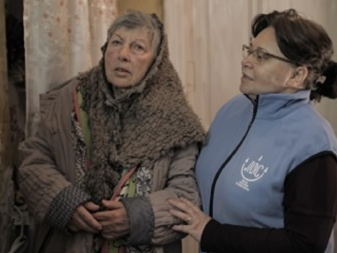
That was the challenge confronting 79-year-old Bella in Odesa, Ukraine, who spent last winter doing everything she could to stay warm.
She turned on her electric heater, but only in the room where she slept. She watched it carefully, knowing every extra minute of warmth came with a cost, as electricity prices have soared since the outbreak of the war in 2022. When the cold became too much, she filled bottles with boiling water and placed them in her bed, letting them provide a little warmth through the night.
But she could not stay in bed all day.
“It gets terribly cold here,” Bella says. “One winter it was only [43 degrees Farenheit]… inside.”
Bella has lived her entire life in the same century-old building, a home that has witnessed decades of history and family memories.
But in recent years, the sounds outside her window have changed.
The war has brought a new reality to Odesa’s elderly Jewish community. Air raid sirens. Attacks on critical infrastructure. Power outages that leave homes dark and cold for hours, sometimes days.
For Bella, who lives alone and depends on a small pension, every disruption creates another worry. Will she be able to afford her medicine? Will she have enough food? Will she be able to stay warm?
But even in the darkness, Bella is reminded of something important. She is not alone.
A Lifeline Across the Ocean
Thousands of miles away, members of The Jewish Federation of Greater Washington community are helping ensure that elderly Jews like Bella are cared for. Thanks to support from Federation’s unrestricted Annual Campaign and grants from its Jewish Community Foundation, the American Joint Distribution Committee (JDC) can provide Bella with essential winter assistance, food, and medication.
Last winter, the help allowed Bella to use her limited income for heating and other necessities, but the impact went far beyond what arrived at her door. It told her that someone remembered her. That someone cared. That she remained part of a Jewish community, even across continents. This month, Odesa has faced waves of horrible attacks. An overnight Russian missile and drone strike earlier this month damaged residential buildings and other infrastructure, leaving people injured and disrupting power and water in parts of the city.
More Than a Number
Bella is one of thousands. In 2025, Federation helped JDC provide lifesaving support to 5,077 elderly Jews throughout the Odesa region, including 847 Holocaust survivors.
Numbers help us understand the scale of a crisis. But they cannot tell us what it feels like to sit alone in a cold apartment, or what it means when someone knocks on your door to help.
Behind every number is a story. There is also Lyudmila, 79, who lives alone and relies on support to afford her medications, food, and utilities. With a monthly pension of only $104, Lyudmila knows exactly how quickly costs can add up.
“I use my JDC bank card to buy my medications,” she says. “Then I can purchase food and pay for utilities from my pension. Without the bank card, I wouldn’t be able to afford the treatment I need to survive.”
Warmth That Goes Beyond the Heater
In Odesa, warmth comes in many forms. Sometimes it is a package delivered to someone’s door. Sometimes it is medicine that makes an impossible choice a little easier.
And sometimes, it is simply a visit.
JDC’s homecare workers provide practical support to frail and homebound seniors, helping with cooking, laundry, errands, and personal care. But their presence offers something equally important: companionship.
A conversation. A familiar face. The reassurance that someone is still looking out for you. This is what Jewish responsibility looks like in action. Kol Yisrael arevim zeh bazeh—all of Israel is responsible for one another.
Keeping Jewish Life Alive
Even after years of crisis, Odesa’s Jewish community continues to find moments of joy. Last year, as Rosh Hashanah approached, seniors gathered with younger generations through Kesher Dorot, a program designed to connect older adults with children and families.
Together, they painted pomegranate paintings by the sea, creating something beautiful while celebrating the traditions that have carried Jewish communities through generations.
For a moment, the war was not the center of the room. Community was.
Because survival is about more than having enough food, medicine, or heat.
It is about knowing you have a family.
They Are Counting on Us
Just this weekend, Odesa faced another wave of horrible attacks. An overnight Russian missile and drone strike damaged residential buildings and other infrastructure, leaving people injured and disrupting power and water in parts of the city.
For people like Bella and Lyudmila, the war is not something they read about in the news. It is the sound of explosions outside their windows. The overwhelming fear that at any minute it may be their home blasted into ruins. It is a dark, freezing apartment when the power goes out, and the rising cost of the food and medicine they need to stay alive.
And it is why our support matters now more than ever.
Through The Jewish Federation of Greater Washington, you can help JDC continue to save lives in Ukraine, providing food, medicine, winter assistance, homecare, and the human connection that reminds people like Bella and Lyudmila that they have not been forgotten.
There are thousands more stories like theirs. And when you give to Federation, you help make sure we can be there for them.
Three years after October 7, Hen Mazzig reflects on grief, Jewish identity, antisemitism, and the importance of making room for one another across different experiences and perspectives.
Three years after October 7, Federation continues to stand with communities across Israel, evolving from emergency relief to trauma support, economic recovery and long-term rebuilding—helping families, individuals and communities take the next step toward resilience and hope.
As the October 7 anniversary returns, how can the Jewish community channel grief and passion into a future shaped by both vigilance and love? Drawing on Rav Joseph Soloveitchik’s Kol Dodi Dofek, this reflection explores the tension between self-protection and moral aspiration.
Before traveling to Georgia and Ukraine, I want to share a story that has shaped how I think about our responsibility to one another.
I just finished my friend Daniel Grossman’s new book Seeing Red. In it, Danny recounts his time working as a young foreign service officer in Leningrad and his overt and covert efforts to help refuseniks. As you might guess, his tour ended when the Soviets kicked him out.
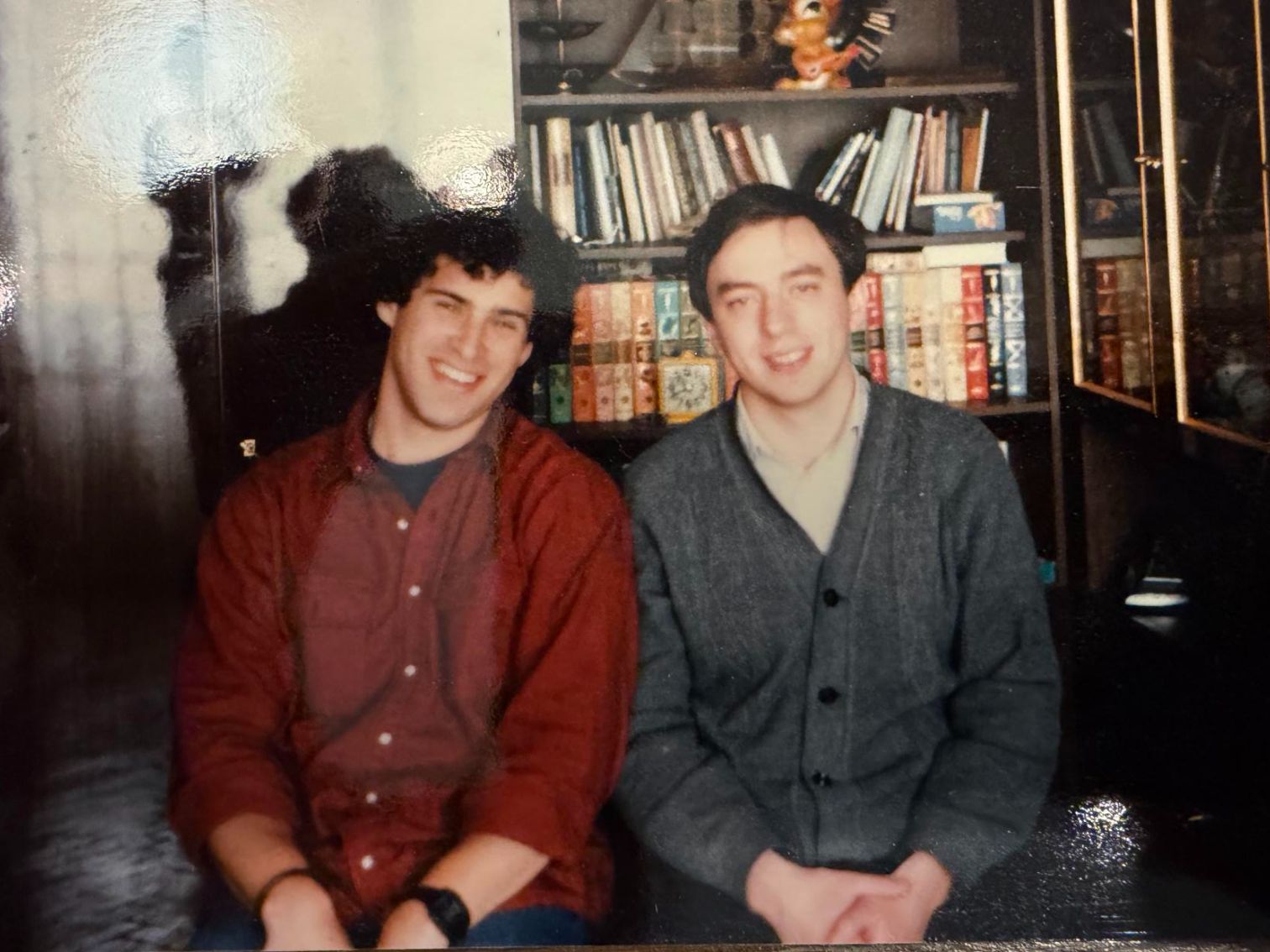
Danny’s tales brought back memories of my own trip to the Soviet Union in 1987. A friend and I were living in New York leading a Zionist youth group, and the Jewish Agency asked (though not explicitly due to the sensitive nature of the operation) if we would be willing to travel to the Soviet Union and visit with refuseniks—some living in central cities such as Moscow and others in more remote communities in Siberia, including Irkutsk or Novosibirsk—and bring aid on behalf of global Jewry.
We were provided with specific people to visit (one of whom is pictured with me above) and asked to deliver Russian-Hebrew dictionaries—which we had to wear under our clothes to get past security—along with goods people could sell to earn money after many had lost their jobs and messages of support from Jews around the world. Looking back, I realize that trip gave me an enduring appreciation for what it means to be responsible for one another as a Jewish people. It’s a lesson that has stayed with me ever since, and one I’ve been thinking about as I prepare to return to the region.
This coming week, I’ll be joining a group of Federation executives on a trip to Georgia and Ukraine. We will visit with people in their homes and see firsthand the critical services your generosity makes possible through Federation’s partnership with JDC. We’ll hear directly from local communities about their circumstances and the challenges they are facing. We’ll also meet with volunteers and activists in Ukraine to learn how they’re developing local leadership and sustaining Jewish community in the face of war, uncertainty, and economic hardship.
I believe in the power of doing this work in person. By showing up, we’ll get to witness the dignity, resilience, and determination with which these communities are building Jewish life and bring those lessons back with us. And we, in turn, will get to express our continued commitment to caring for the most vulnerable and building Jewish life around the world.
If you’re interested in learning more about our exchange, I invite you to join a webinar on Wednesday, July 22 at 12:00 PM a few days after I return. I’ll share what we discovered and how those insights will help inform Federation’s ongoing work to support Jewish communities in the former Soviet Union and beyond.
If you’d like to learn more about the work your generosity makes possible in Ukraine, you can do so here.
In 1987, I set off with a backpack full of supplies and messages of solidarity. Today, I travel carrying the trust and generosity of an entire community. This is one of my favorite aspects of Federation’s work—helping to build our community here in Greater Washington while strengthening the bonds that defy borders. It’s these kinds of missions that put into action the idea that no Jewish community stands alone. We are part of a global family, one that shows up for, relies on, and supports one another.
Three years after October 7, Hen Mazzig reflects on grief, Jewish identity, antisemitism, and the importance of making room for one another across different experiences and perspectives.
Ten years after first arriving in Greater Washington, a returning educator reflects on Shlichut, Jewish connection, the impact of October 7, and the power of authentic relationships to build hope and resilience.
Three years after October 7, Federation continues to stand with communities across Israel, evolving from emergency relief to trauma support, economic recovery and long-term rebuilding—helping families, individuals and communities take the next step toward resilience and hope.
Prepared by Jewish Federations of North America’s Israel Office Shared by The Jewish Federation of Greater Washington
On Wednesday evening, two powerful earthquakes measuring magnitudes 7.2 and 7.5 struck northern Venezuela less than a minute apart, causing widespread destruction. Search-and-rescue operations continue as emergency crews race to locate survivors trapped beneath collapsed buildings. Tragically, at least 235 deaths and more than 4,300 injuries have been confirmed, though both figures are expected to rise. Hundreds of people are verified as missing, and communications outages and extensive damage in Caracas and the coastal state of La Guaira have left tens of thousands temporarily unaccounted for with families frantically searching for loved ones. Tens of thousands have also been displaced, with many sheltering in public buildings and open spaces as aftershocks continue.
International assistance is mobilizing rapidly, although damage to Maiquetía International Airport has complicated the arrival of international rescue and humanitarian teams. The United Nations is coordinating urban search-and-rescue efforts, while the United States, Mexico, Colombia, Spain, France, Italy, and El Salvador have deployed rescue personnel, medical teams, equipment, and humanitarian supplies. Relief organizations are also providing emergency food, shelter, and medical assistance.
Impact on the Jewish Community
Nearly all of Venezuela’s approximately 3,000 Jews live in Caracas, where many buildings in Jewish neighborhoods sustained damage. Three community members have been confirmed dead, and one remains missing after the building they were in collapsed. Sadly, those numbers are expected to rise. Several community members have been left homeless, and the community is working to secure temporary housing. Despite the tragedy, community leaders report a strong sense of calm and coordination, having quickly accounted for members, assessed the needs of older adults and those experiencing anxiety, and provided appropriate support.
Our hearts are with the Jewish community of Venezuela and all those affected by these devastating earthquakes. We mourn those who lost their lives and pray for the swift recovery of everyone who has been injured.
JDC Response
JDC has maintained a longstanding presence in Venezuela through its partnership with the Jewish community, supporting a welfare and humanitarian aid network for its most vulnerable members. JDC was in contact with community leadership within minutes of the earthquake and remains in close communication to assess urgent needs, including conditions at key community institutions now serving as shelters. Immediate priorities include shelter management, essential supplies, water, sanitation, electricity, safety, psychosocial support, and operational coordination.
JDC has also launched a non-sectarian response through JDC GRID (Global Response and Innovative Development), its humanitarian and disaster response arm. In partnership with the local community, it is prioritizing the delivery of food, safe drinking water, and other essential supplies to the hardest-hit and most difficult-to-reach areas, including La Guaira. As access improves, JDC plans to provide medical organizations with critical supplies and support temporary shelter for displaced families.
The Jewish Agency Response
The Jewish Agency for Israel activated its Overseas Emergency Desk immediately following the earthquake and has remained in continuous contact with community leadership. It is providing immediate assistance to affected community members, including temporary housing and other essential support, and has established a dedicated hotline through its Global Center for Venezuelan immigrants in Israel and those seeking information about immigrating to Israel.
In recent years, through its JReady program, the Jewish Agency has helped strengthen the community’s emergency preparedness through resilience and trauma training and emergency planning. As a result, the community has responded to the crisis in an organized and effective manner, while JReady continues to provide guidance and ongoing support.
This crisis highlights the value of the global emergency response network that Federations have built and sustained. Thanks to our ongoing core support, the North American Jewish community was able to respond immediately and will continue to stand with the Jewish community of Venezuela for as long as needed.
Additional Humanitarian Response
The Israeli government has said it is preparing for the possibility of sending an aid delegation. “The Foreign Ministry is holding a situational assessment with the relevant figures in Israel and is determining ways to help,” it said in a statement on Thursday morning. However, the absence of diplomatic relations between Israel and Venezuela would complicate any deployment.
Other Jewish and Israeli humanitarian organizations have also mobilized, although Israeli organizations face challenges obtaining visas for Israeli passport holders. IsraAID has deployed its global Emergency Response Team, working with specialists from neighboring Colombia to assess needs and support affected communities. Cadena International, HIAS, and World Jewish Relief are coordinating with local partners to assess needs and prepare emergency assistance. NATAN is dispatching medical and mental health professionals, while SmartAID is deploying search-and-rescue personnel along with water purification systems, telecommunications equipment, and clean energy units, particularly for remote areas.
The Venezuela Earthquake Relief Fund has been established by JFNA, our national Federation partner, to provide immediate humanitarian assistance and support long-term recovery efforts.
Three years after October 7, Hen Mazzig reflects on grief, Jewish identity, antisemitism, and the importance of making room for one another across different experiences and perspectives.
Ten years after first arriving in Greater Washington, a returning educator reflects on Shlichut, Jewish connection, the impact of October 7, and the power of authentic relationships to build hope and resilience.
Three years after October 7, Federation continues to stand with communities across Israel, evolving from emergency relief to trauma support, economic recovery and long-term rebuilding—helping families, individuals and communities take the next step toward resilience and hope.
In Pirkei Avot, we’re taught: “It is not your duty to finish the work, but neither are you at liberty to neglect it.” In the Torah, we are commanded not to stand idly by when our neighbors are in need.
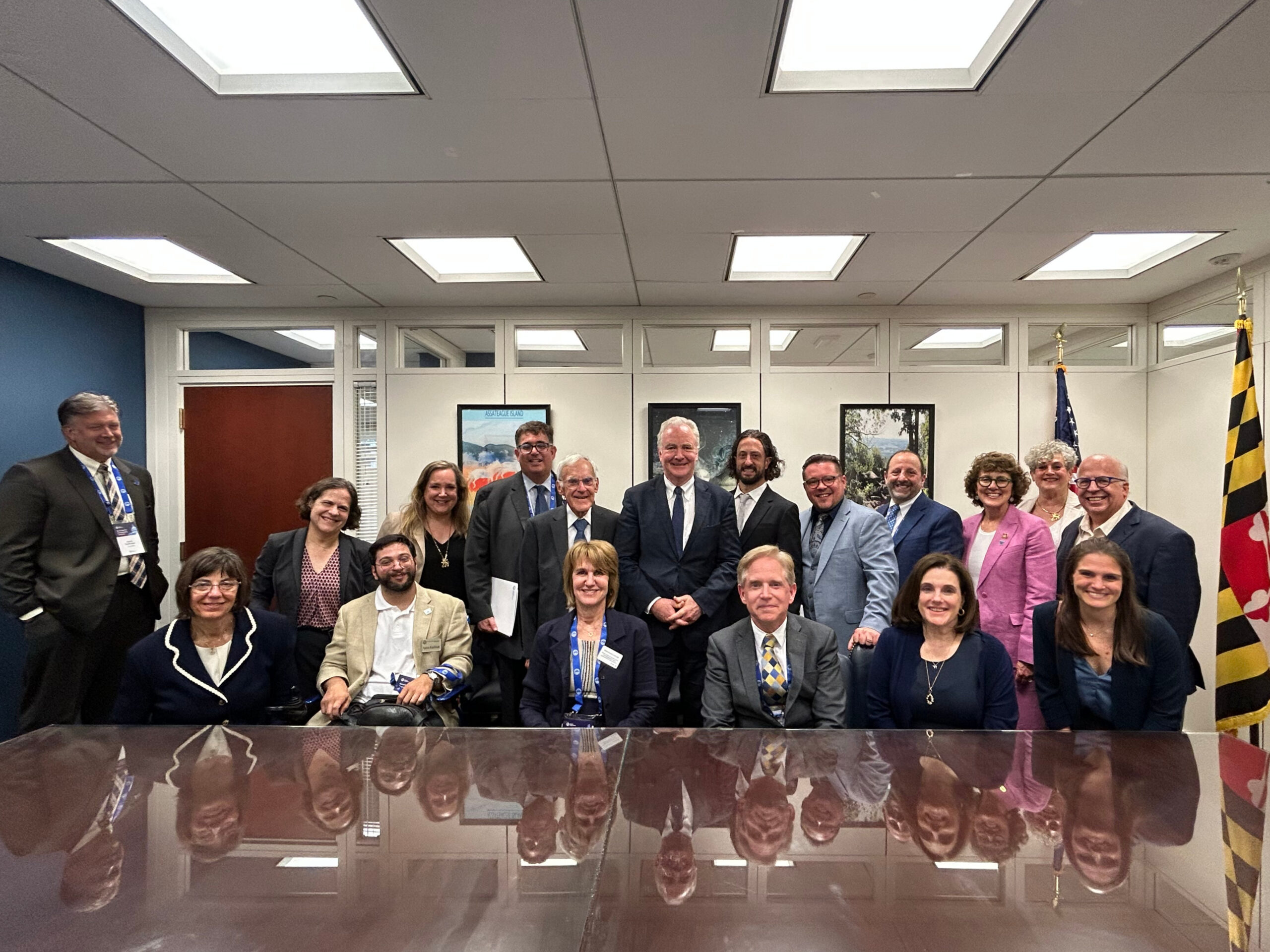
These Jewish values—responsibility, solidarity, and action—were loudly heard last week when hundreds of Jewish leaders and advocates gathered on Capitol Hill to advocate for the safety and security of our Jewish communities nationwide.
More than 400 leaders from 82 Jewish communities came to Washington, DC as part of The Jewish Federations of North America’s Security Fly-In. Representing Jewish Federations, synagogues, JCCs, schools, camps, Hillels, community relations councils, and security organizations, participants arrived carrying not only policy priorities, but deeply personal stories.
The Greater Washington delegation, organized by The Jewish Federation of Greater Washington alongside partners including Jewish Community Relations Council of Greater Washington, met with members of Congress and congressional staff from across our region, including Senator Mark Warner of Virginia and Senator Chris Van Hollen of Maryland.
Every Person Had a Story
Before those meetings began, something else happened in the room: people shared their fears, their exhaustion, and their determination.
Every person present had a story of how their community has had to grapple with rising antisemitism and security concerns.
A synagogue leader explaining the impossible budgeting decisions communities now face as security costs continue to rise. A parent describing that their five-year-old child knows not to enter their synagogue building if there’s no security on duty. A camp professional talking about the responsibility of creating joyful Jewish experiences while also preparing for emergency scenarios no one ever imagined would become routine.
Eddie Rubin, a parent at Temple Israel in West Bloomfield, Michigan where there was an antisemitic attack in March, shared: “I need people to understand what ‘inches away’ meant.” If the car packed with explosives made it just a few more inches, “That’s my kids classroom, where he’s sitting. Had [the attacker] been able to get out of that car, he would have been inside my kids’ classroom in seconds. And my kids would not be here today.”
The emotion in the room was palpable. Many spoke about how difficult it has become to accept heightened security as “the new normal.” Communities are doing everything possible to keep people safe, but funding has not kept pace with the growing threats facing Jewish institutions and other faith communities across the country.
Turning Personal Stories Into Advocacy
And yet, amid the fear and frustration, there was also tremendous strength.
There was power in seeing hundreds of Jewish communal leaders from every corner of the country come together with one shared message: Jewish life must be protected, and our communities deserve to gather openly and safely.
Those personal stories became the heart of conversations on Capitol Hill. Our delegation urged lawmakers to strengthen federal support for nonprofit and faith-based security programs and to advance legislation like the bipartisan Jewish American Security Act, which seeks to expand resources that help protect vulnerable communities.
This advocacy effort comes at a time when antisemitism and threats against Jewish institutions have reached alarming levels. Across the country, Jewish communities are being forced to make impossible choices between funding critical programs and funding the security measures needed to protect them.
In Greater Washington, our community is working proactively to meet this growing need through initiatives like JShield, Federation’s community security initiative. By leveraging trusted partnerships, strong relationships with law enforcement, and a community-wide approach to safety, JShield is helping build a culture of security across our region—one where every institution and community member understands their role in keeping our community safe.
JShield provides one-on-one consultations, emergency preparation plans, security trainings, help securing nonprofit security grants, and more to hundreds of local Jewish institutions entirely free of charge, ensuring that cost is never a barrier to safety.
Showing Up for Our Community
As we marked Jewish Heritage Month, the Security Fly-In served as a powerful reminder that Jewish identity is not only something we celebrate, it’s something we have to protect. Advocacy is one of the ways we do that. By showing up. By telling our stories. By refusing to stand idly by.
The work ahead is not finished. But last week, hundreds of voices came together to ensure that Congress heard clearly what our communities need: safety, partnership, and the ability to live Jewish life openly and without fear.
Three years after October 7, Hen Mazzig reflects on grief, Jewish identity, antisemitism, and the importance of making room for one another across different experiences and perspectives.
Ten years after first arriving in Greater Washington, a returning educator reflects on Shlichut, Jewish connection, the impact of October 7, and the power of authentic relationships to build hope and resilience.
Three years after October 7, Federation continues to stand with communities across Israel, evolving from emergency relief to trauma support, economic recovery and long-term rebuilding—helping families, individuals and communities take the next step toward resilience and hope.
Israel continues to face evolving challenges, from the lasting impact of October 7 to the realities of the latest war with Iran. In moments like these, the strength of our global Jewish community is measured by how quickly and effectively we show up for one another.
Through our longstanding partnership with The Jewish Agency for Israel, Federation is helping ensure that individuals, families, and communities receive both immediate support and long-term care when they need it most.
Meeting Urgent Needs, Strengthening Communities
Throughout the year, The Jewish Agency focused on supporting those most affected by helping communities rebuild, assisting vulnerable populations, and strengthening Israeli society in the face of ongoing uncertainty. From aiding displaced families to supporting long-term recovery, this work helped restore stability and a sense of possibility.
At the same time, thousands of Jews around the world made the life-changing decision to build their future in Israel. In 2025 alone, more than 20,000 new immigrants arrived amid war and rising global antisemitism, demonstrating a powerful commitment to Israel’s future.
Showing Up in Moments That Matter
The impact of this work is perhaps most visible in moments of crisis.
In December 2025, following a terror attack at a Chanukah gathering in Bondi Beach, Australia, The Jewish Agency deployed trauma experts within 48 hours, providing immediate support to the local Jewish community while activating global resources for recovery and resilience.
This kind of rapid, coordinated response reflects a deeper truth about the Jewish people:
“When Jews are attacked anywhere, it affects us everywhere… Our answer is solidarity, responsibility, and the determination to build a stronger future together.”
That sense of shared responsibility—across borders and communities—is what makes this work possible.
A Global Network of Connection and Care
Beyond crisis response, The Jewish Agency continues to strengthen the bonds that connect Jews worldwide.
Through programs that build identity, deepen relationships, and foster a sense of belonging, Jews across generations and geographies are connected not only to Israel, but to one another. In 2025, this global network proved essential, ensuring that communities everywhere felt supported, prepared, and part of something larger than themselves.
Federation’s Role: Turning Responsibility into Action
By investing in The Jewish Agency, we are not only responding to immediate needs—we are strengthening the global infrastructure that ensures the Jewish people can respond, recover, and rebuild together.
This partnership reflects a core belief: that our community is strongest when we act as one. When Israel faces hardship, we show up. When communities need support, we mobilize. And when connection matters most, we help build it.
Looking Ahead
The challenges facing Israel did not end in 2025—and neither did our commitment.
Together with The Jewish Agency and partners around the world, Federation continues to support recovery, strengthen communities, and deepen the bonds that connect us as one people.
Because ensuring a strong, resilient Israel and a connected global Jewish community is not just about responding in moments of crisis. It’s about building a future grounded in shared responsibility, belonging, and hope.
Three years after October 7, Hen Mazzig reflects on grief, Jewish identity, antisemitism, and the importance of making room for one another across different experiences and perspectives.
Three years after October 7, Federation continues to stand with communities across Israel, evolving from emergency relief to trauma support, economic recovery and long-term rebuilding—helping families, individuals and communities take the next step toward resilience and hope.
As the October 7 anniversary returns, how can the Jewish community channel grief and passion into a future shaped by both vigilance and love? Drawing on Rav Joseph Soloveitchik’s Kol Dodi Dofek, this reflection explores the tension between self-protection and moral aspiration.
On Friday, February 27, just before Shabbat, Inbal called her family in Israel with a question that had become all too familiar: Are you prepared for every possible scenario?
They told her they had already been ready for weeks. In many ways, everyone felt that something was coming. And yet, as she would soon learn, nothing can truly prepare you for war.
Inbal is part of the Community Shlichim program, a partnership between The Jewish Federation of Greater Washington, The Jewish Agency for Israel (JAFI), local synagogues, and other partner organizations which brings Israeli emissaries to our region to deepen connection and bring Israeli life and perspective into our community. Originally from a small town in northern Israel, Inbal now finds herself navigating the distance between two realities—supporting the Greater Washington community while her own family lives through the unfolding crisis at home.
Here is her story:
When Sirens Began
The night of February 27 on the East Coast, Saturday morning in Israel, I received a news alert: sirens were sounding across Israel. I immediately called my father, sensing that this might be the beginning of a war with Iran. He told me that he was already on his way to his military base to report for reserve duty.
My thoughts then turned to my grandfather, who goes to synagogue early every Shabbat morning. That day, we could not reach him. He only realized what had begun when he returned home from prayer. Our whole family was tense, worried a siren might go off while he was still outside and unprepared.
That was Shabbat morning in Israel.
Between Fear and Joy
The war began during the holiday of Purim. Purim is meant to be one of the happiest holidays, a time to dress up, celebrate, laugh, and be together, filled with joy and light. And yet, in Israel, the transition between sadness and joy is something we know all too well, and sometimes the distance between them is only a matter of hours. In a strange and almost ironic way, 2,500 years after the story of Purim, it can feel as though we are witnessing another Purim story unfolding, another moment in which the Jewish people are called upon to stand strong.
Holding Two Realities
Since that morning, I have spoken with my family almost every day. My grandfather continues to go to synagogue, still without taking his phone. When sirens sound, he says they simply continue praying, even though the stress is very real. He maintains his routine because, as he explained to me, staying at home for so long is not healthy, neither mentally nor physically.
Many of my family members and friends have also been called for reserve duty, some for the seventh time since October 7. They are exhausted, and yet they tell me that they understand the importance of this moment. They hold on to the hope that after this round, there will finally be a few years of quiet.
Meanwhile, being here in Washington as an Israeli shlicha during a time like this is deeply complex. On the one hand, I feel a strong responsibility to be present with the community, to continue showing up, and to create connection and meaning around what is happening. On the other hand, there is a constant feeling of distance, and with it, the fear of being disconnected from everything unfolding back home.
A Community to be Proud Of
Nevertheless, I feel incredibly fortunate to be part of the Greater Washington Jewish community, a community that truly cares. Every day, people ask me how my family is doing. They check in. They engage in conversations about what is happening. This support helps me stay connected and grounded, while also allowing me to find a sense of balance.
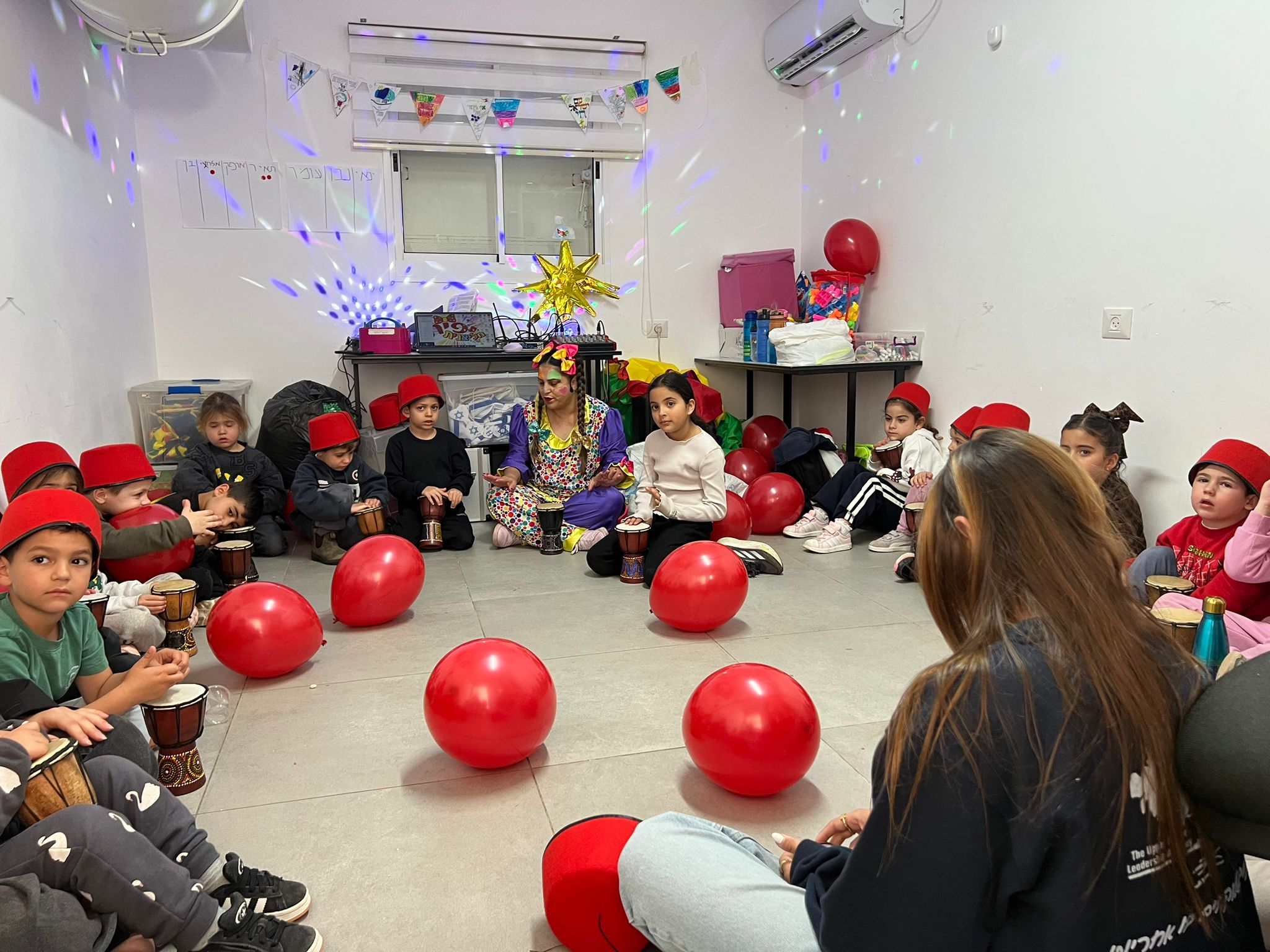
Perhaps most unexpectedly, it is the young children in the community who help me the most in these moments. They bring me into their world of imagination, stories, and innocence, and for brief moments, they allow me to breathe.
Through this experience, I have come to understand that the message I bring here is my sense of responsibility. If the people in Israel can continue to demonstrate resilience, courage, and strength every single day, then I must carry and reflect that same resilience here as well. After all, the story of the Jewish people has always been one of resilience, of facing darkness and still choosing light.
With Hope for Spring
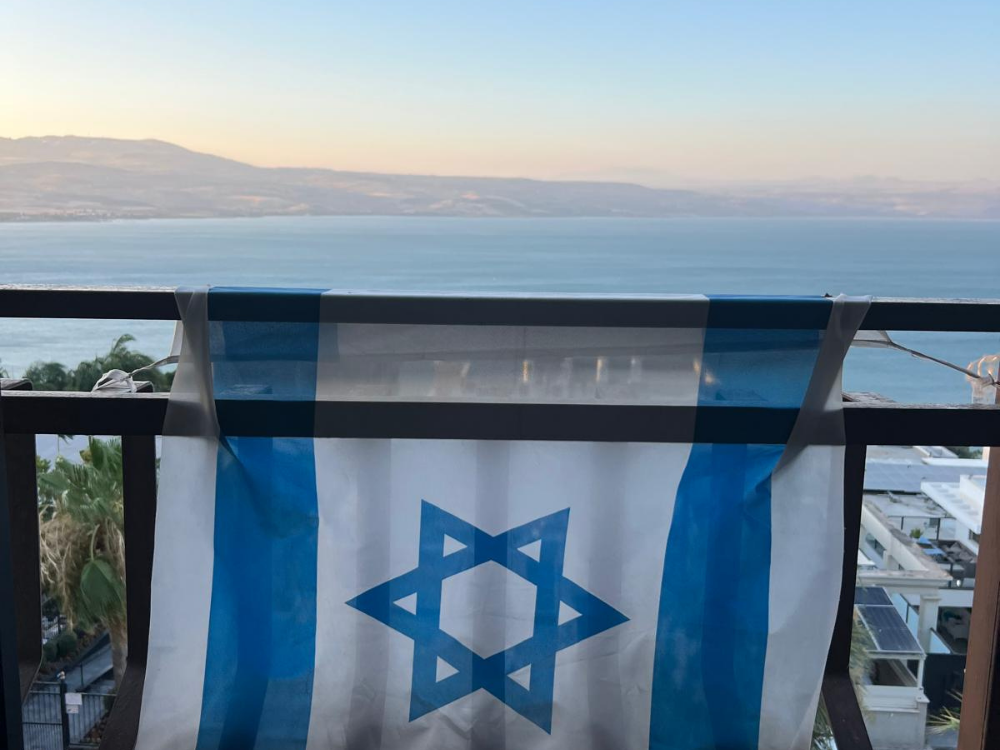
As the war enters its fifth week, we now find ourselves approaching Passover, the holiday of freedom and spring. Passover tells the story of leaving Egypt, of moving from slavery to freedom, and of becoming who we are meant to be. In this moment, I find myself hoping that this Passover will bring a sense of freedom for all of us—the freedom to live openly as who we are, proud of our Israeli and Jewish identities; to walk with our flag and our Star of David without fear; and to live without the routine of war, without constantly seeking the nearest shelter.
Passover also marks the arrival of spring, a season of renewal, when everything begins to grow again after the storms. There is something deeply powerful in that connection: just as strong trees withstand the storm, we see resilience, and like flowers that bloom in the fields, we see new beginnings. Perhaps that is the Jewish people’s story—to hold both, and to remember that if we want to see the rainbow, we must first be willing to stand in the rain.
Three years after October 7, Hen Mazzig reflects on grief, Jewish identity, antisemitism, and the importance of making room for one another across different experiences and perspectives.
Three years after October 7, Federation continues to stand with communities across Israel, evolving from emergency relief to trauma support, economic recovery and long-term rebuilding—helping families, individuals and communities take the next step toward resilience and hope.
As the October 7 anniversary returns, how can the Jewish community channel grief and passion into a future shaped by both vigilance and love? Drawing on Rav Joseph Soloveitchik’s Kol Dodi Dofek, this reflection explores the tension between self-protection and moral aspiration.
How Federation partnerships enabled rapid response in Beit Shemesh
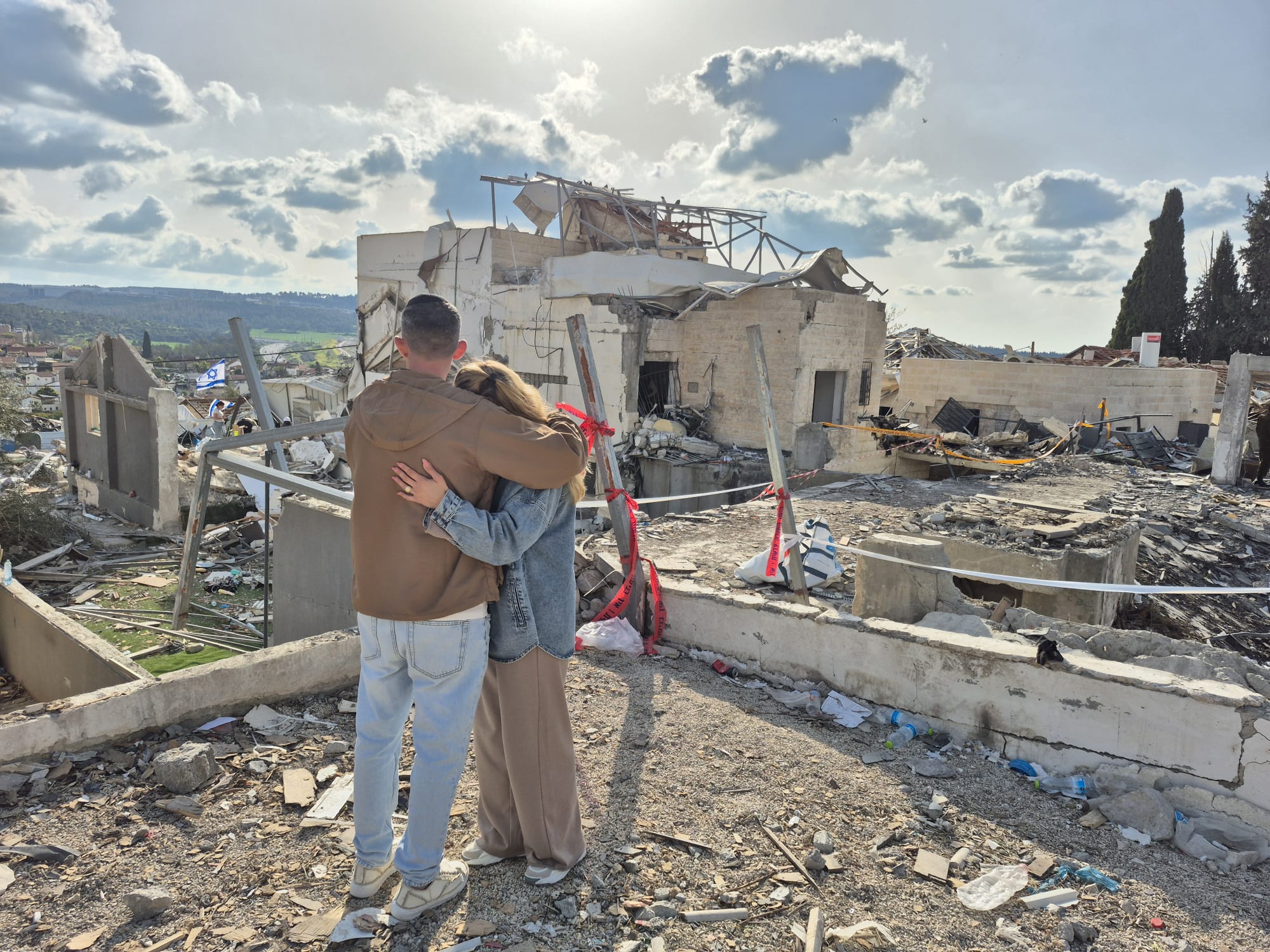
On March 1, the city of Beit Shemesh, located in the hills near Jerusalem, was rocked by a direct strike from an Iranian missile. In the immediate aftermath, The Jewish Federation of Greater Washington mobilized our network of on-the-ground partners to rapidly assess urgent needs and direct emergency support where it would have the greatest impact. We quickly identified the Zinman Community Center as a critical anchor for relief and recovery.
The Zinman Community Center has been dedicated to serving the city’s most vulnerable residents for many years, including lower income elderly and young Ethiopian Israelis. Located just one block from the site of the missile strike, the Center was able to respond immediately—opening its doors to first responders and survivors within an hour of the attack.
In the wake of a missile strike, Israelis are often left navigating uncertainty: damaged or inhabitable homes, injured loved ones, and the ongoing stress and anxiety caused by further sirens and attacks. In those first critical hours, speed and coordination were essential to ensure there was a clear, trusted place to turn for support.
From community center to support hub
Because of its longstanding relationship with the Center, Federation was able to act quickly and decisively, recognizing that the Center was not only well-known within the community, but also strategically positioned to meet the moment. With Federation’s emergency funding, the Center became a Family Support Hub for the neighborhood. Staff and volunteers helped residents file government claims for damaged property, access other government and local benefits, and connect with social workers for psychological support.
At the same time, Federation’s support made it possible for the Center to bring moments of normalcy and joy. Children and families were able to gather in the immediate days following the strike to celebrate Purim, enjoying a party outside and in the Center’s mamad (safe room) when needed. Volunteers assembled and delivered warm meals and activity kits to elderly Holocaust survivors who remained in the area. Every day, the Center helps hundreds of residents find connection, relief, and support from each other.
What made this possible
At a moment of crisis in Israel, Federation’s role is to act quickly and strategically—activating trusted local partners who are already embedded in their communities, so support reaches people quickly and where it matters most. Through its support for the Zinman Community Center, Federation is helping residents of Beit Shemesh recover, rebuild, and remain resilient in the face of immense challenges.
Learn more about how we are supporting partners in Israel during the current crisis.
Three years after October 7, Hen Mazzig reflects on grief, Jewish identity, antisemitism, and the importance of making room for one another across different experiences and perspectives.
Three years after October 7, Federation continues to stand with communities across Israel, evolving from emergency relief to trauma support, economic recovery and long-term rebuilding—helping families, individuals and communities take the next step toward resilience and hope.
As the October 7 anniversary returns, how can the Jewish community channel grief and passion into a future shaped by both vigilance and love? Drawing on Rav Joseph Soloveitchik’s Kol Dodi Dofek, this reflection explores the tension between self-protection and moral aspiration.